YFS also seeks to hold perpetrators responsible for their violence and can provide referrals to YFS’ Responsible Mens program or other behaviour interventions.
Hit the Quick exit button in the top right or press [esc] on your keyboard to close this site instantly. To clear your browser history follow these steps.
YFS also seeks to hold perpetrators responsible for their violence and can provide referrals to YFS’ Responsible Mens program or other behaviour interventions.
During the 2024-25 financial year, SHINE provided short-term case management, support with safety planning, initial and ongoing assessments of risk, and counselling to 316 women and 79 children. On average, women reported a 66% increase in their feelings of safety when they exited the program.
Alana², SHINE’s Program Manager, describes the team’s commitment to empowering women as key to how their service works.
‘We don’t tell women what they have to do; we don’t make them leave their partner if that’s not what they want,’ she explains. ‘We listen and don’t judge. We provide information and work with a woman on her goals.’
‘Often a perpetrator has insisted on making all the big decisions, belittled her opinion, or made her feel guilty for expressing her needs. At SHINE, that doesn’t happen. We help women on their terms.’
“At SHINE, that doesn’t happen. We help women on their terms.”
Although referrals to SHINE usually come from police, other organisations can also refer women to SHINE – or women living in the catchment area can reach out to YFS themselves³.
Following a referral, an Intake and Assessment Worker will connect with the woman and explore what concerns she may have. Together, they will talk about what safety looks like, and what she might need to increase her safety.
‘Whenever we contact a woman, we always start by checking it is safe at that time for her to talk and explore how and when it is safest to continue connecting with her.’
Through casework, SHINE can help with:
SHINE DFV specialists are also available at Beaudesert Magistrates Court every Wednesday to help women navigate court process, use the safe room, understand domestic violence orders, and connect with legal support.
Whilst Alana has noticed a gradual increase in understanding about DFV and coercive control within the community over the past few years, she still encounters misconceptions.
‘People often think women are just as likely to be perpetrators as men, or that women just prefer men being in charge in the relationship.’
These myths about DFV are evidenced in the 2021 National Community Attitudes towards Violence against Women Survey, which found that while there have been some improvements in Australians’ attitudes towards gendered violence over the past decade, 23% of respondents still agreed that much of what is called domestic violence is just a normal reaction to day-to-day stress and frustrationˆ.
‘All forms of domestic and family violence are serious and have devastating effects on women and children’s safety, health and wellbeing,’ Alana says. ‘It’s about using your power to control another person, which has no place in a healthy relationship.’
‘It might include a perpetrator preventing their partner from keeping a job, controlling who she sees or talks to, making her feel bad about herself, or making threats to harm her if she doesn’t do what he wants.’
Another perception Alana frequently comes across is people believing that domestic and family violence happens elsewhere, not in their suburb or town.
‘Unfortunately, we know there are men using violence in every community across the country,’ Alana says. ‘Around one in four women and girls over the age of 15 has had an intimate partner use violence against her.’
This year’s 16 Days of Activism to End Gendered Abuse campaign focused on ending digital violence against women and girls.
Digital violence is something the SHINE team also encounter in their work, with perpetrators using personal images to shame, control, or humiliate their partner – often with threats to share the content online.
Like digital content being used for violent acts, Alana also points to the way technology that can monitor people’s movements has been normalised through popular apps that track location, like Snapchat.
‘It might start with something that seems innocent, like a request to share your phone’s location to make sure you get home from your shift okay. But it can easily develop into a tool of control.’
‘Or it can be without the other person’s knowledge that technology is used for monitoring and surveillance.’
In the Scenic Rim, Alana recognises there are additional challenges for women’s safety, with neighbours often living long distances away from one another, and a lack of public transport meaning people can be isolated more easily.
‘If you are worried about a neighbour or friend,’ Alana says, ‘find a reason to check in regularly.’
‘And please, if you live close enough to hear shouting, call the police straight away. Don’t hesitate or think someone else will call, or that it isn’t your business. Too many people have missed receiving help when they needed it most.’
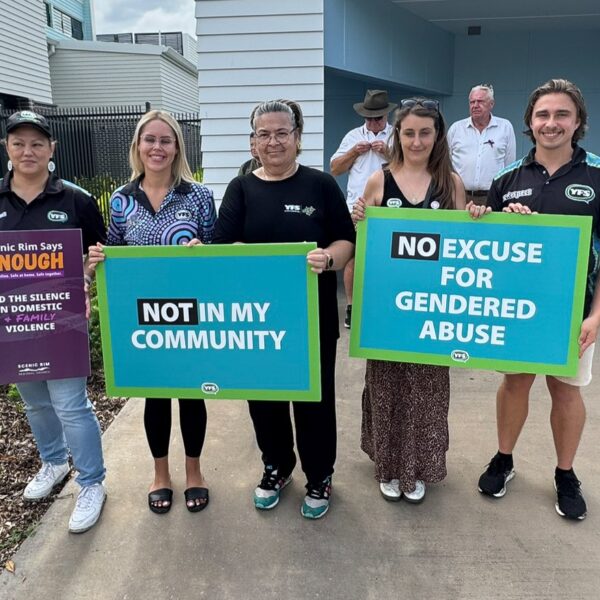
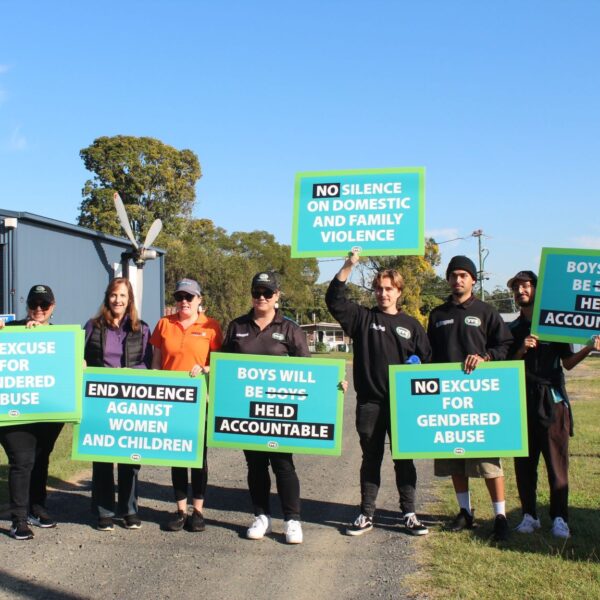
Alana urges everyone in her community to consider ways they can help end gendered violence – whether by calling out gendered stereotyping amongst their work colleagues, encouraging a friend who they suspect is using violence to join a behaviour change intervention program, or by supporting campaigns like the ‘Not In My Community’ movement, which shines a light on the devastating impact domestic and family violence has on individuals and families.
And despite the complex, confronting work Alana and her team face daily, each of them is thankful for the opportunity to show up each day and make a difference. As one client recently shared in their program feedback, ‘the SHINE team saved my life.’
You can reach SHINE by phone, email, or by visiting in person. SHINE supports all women, including LGBTQIA+ and gender-diverse individuals, across the Scenic Rim, Beaudesert, Jimboomba, Flagstone, and surrounding areas.
SHINE is funded by the Queensland Government Department of Families, Seniors, Disability Services and Child Safety.
¹ And some parts of Logan, including Jimboomba.
² While quotes are attributed to Alana to help with readability, they are supported by responses from a group interview with the wider SHINE team.
³ SHINE can be contacted by calling YFS on 3826 1500 or by filling in a contact form on YFS’ website. Women experiencing DFV who are living in the Scenic Rim, Beaudesert, Jimboomba, Flagstone, and surrounding areas are eligible for SHINE support. If you don’t live in one of these locations, you can find your local DFV service provider at https://www.qld.gov.au/community/getting-support-health-social-issue/support-victims-abuse/need-to-know/help-and-support-options/find-local-support or by calling DFV Connect on 1800 811 811.
ˆCommunity attitudes – Australian Institute of Health and Welfare
In an emergency, call 000 and ask for police.